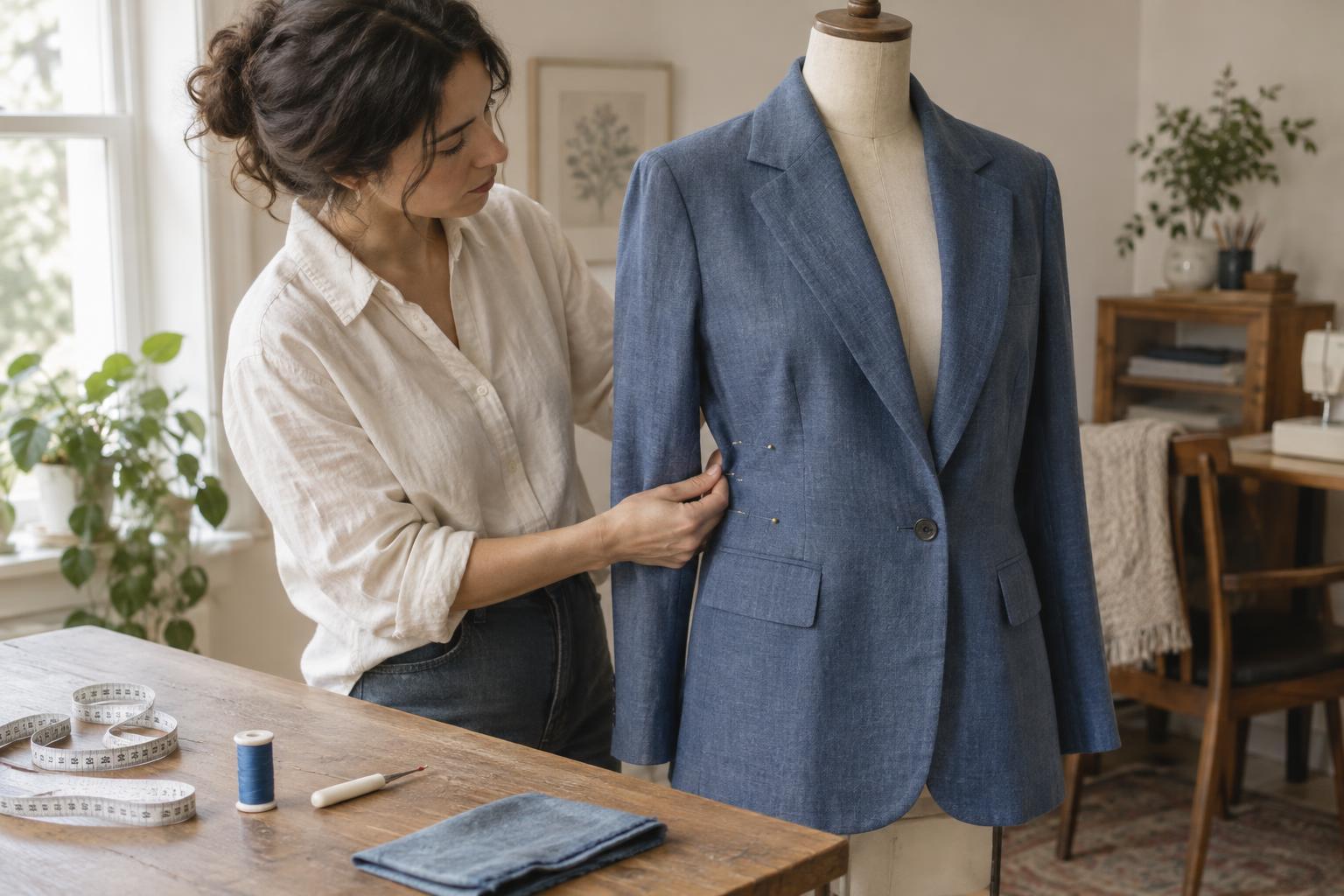
Start with what you want the garment to do
An alteration is worth considering when a garment already has something you want to keep: a colour you enjoy wearing, a silhouette that feels like you, or a detail that makes an outfit more expressive. Tailoring can improve fit, but it cannot always turn a garment you dislike into a favourite. Before focusing on the awkward hem or loose waist, ask yourself whether you would reach for the piece if that problem disappeared.
Try it on with the shoes, layers and accessories you would actually wear. Move around, sit down and look at it from the side as well as the front. Notice the difference between a fit problem and a styling preference. A jacket that pulls across the shoulders may need a different size or cut; a jacket that feels too formal might simply need to be worn with different pieces. Knowing which problem you are solving keeps an alteration purposeful.
Look for changes that preserve the garment’s character
Some alterations are relatively straightforward: shortening a plain hem, adjusting a waistband, taking in a small amount at the side seams or moving a button. These changes can make a noticeable difference without changing the garment’s basic design. If your favourite trousers are comfortable through the hips but pool at your ankles, a shorter hem may let you wear them more often.
Other changes affect several parts at once. Narrowing the shoulders of a structured jacket, changing an armhole or dramatically resizing a garment can require extensive reconstruction. Pattern placement, pockets, linings, pleats and decorative stitching may also limit what can be changed without losing the detail you liked in the first place. Ask what the finished garment would look like, not just whether the requested change is technically possible.
Check the fabric and construction before committing
A good alteration begins with a garment in good enough condition to wear afterward. Inspect areas that receive friction, such as underarms, inner thighs, cuffs and seat seams. Fading, thinning fabric or a weak seam may make an otherwise appealing project less worthwhile. Also check for stains or damage that an alteration will not remove. If you plan to wash the garment regularly, follow its care instructions before deciding on a precise length; a garment that changes size after laundering may fit differently.
Construction matters too. Letting out a seam requires spare fabric inside it, and removing length from a patterned piece can change where the pattern falls. A tailor or alterations specialist can assess these details more reliably than you can from a quick look in the mirror. Bring the shoes or underlayers you intend to wear so the fitting reflects real use. If you are unsure about the result, ask what will be visible afterward, including old stitch marks or a changed hem finish.
Weigh the effort against the wear you expect
There is no universal price point at which an alteration becomes worthwhile. Consider the likely cost, the garment’s condition and how often you expect to wear it. A modest change to a well-loved piece may offer more value to you than an elaborate rebuild of something bought because it was a bargain. Your decision can include sentimental value, but be honest about whether you want a wearable garment or simply want to keep an object that matters to you.
A useful test is to name three outfits you would make with the altered piece. If you can picture them easily and the garment suits your daily life, the alteration has a clear purpose. If every outfit depends on buying something else or dressing for an occasion that rarely happens, pause. Keeping the piece as it is, passing it on or choosing another garment can be a better decision than altering it out of obligation.
Begin with one clear request
If you decide to proceed, describe the problem in everyday terms: “These sleeves cover my hands,” or “I want room to sit comfortably while keeping this shape.” You can also show where you want a hem to fall. A fitting is a chance to discuss options, not a test of technical vocabulary. Ask about the expected result and whether the proposed change can be undone, especially if you are uncertain about a new silhouette.
For your first project, choose a garment you like and a change you can explain simply. Wear it after the alteration and notice what improved: comfort, proportion, confidence or how easily it works with the rest of your wardrobe. That experience will sharpen your eye for future purchases and help you use alterations as a tool for personal style, rather than as a rescue plan for every almost-right piece.


